
So you’ve clicked Google search and searched for “How to Apply Makeup for Beginners.” After trying a few sites, you still haven’t found the right guide that really explains the basics. Luckily, here you are. We’re more than happy to give you the tutorial you need.
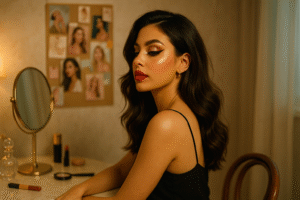
Starting makeup for the first time can feel overwhelming, especially with so many products, brushes, and techniques to choose from. But before you get all wrapped up with what to buy or what trend to follow, here’s the naked truth: makeup is simply about enhancing your natural features and helping you feel more confident. You don’t need an expensive kit or professional skills to begin. What you do need is a simple roadmap that explains what each product is, why it matters, and how to use it. Don’t worry: this How To Apply Makeup for Beginners is just the thing you need. So pick up that brush and let’s get started!
For more learning, check out our beauty basics, our guide to best makeup products, or start exploring eye makeup tutorials. Helpful resources like Revlon, IPSY, and this video tutorial also emphasize keeping things simple and practical.
Quick Beat:
- Wash and moisturize your face so makeup goes on smoothly.
- Use foundation and concealer to even your skin and hide dark circles or spots.
- Shape brows and add simple eye makeup so your eyes look more awake.
- Add blush and lip color to bring back natural warmth.
- Finish with powder or spray to keep everything in place.
Step 1: Prepping Your Skin for Makeup
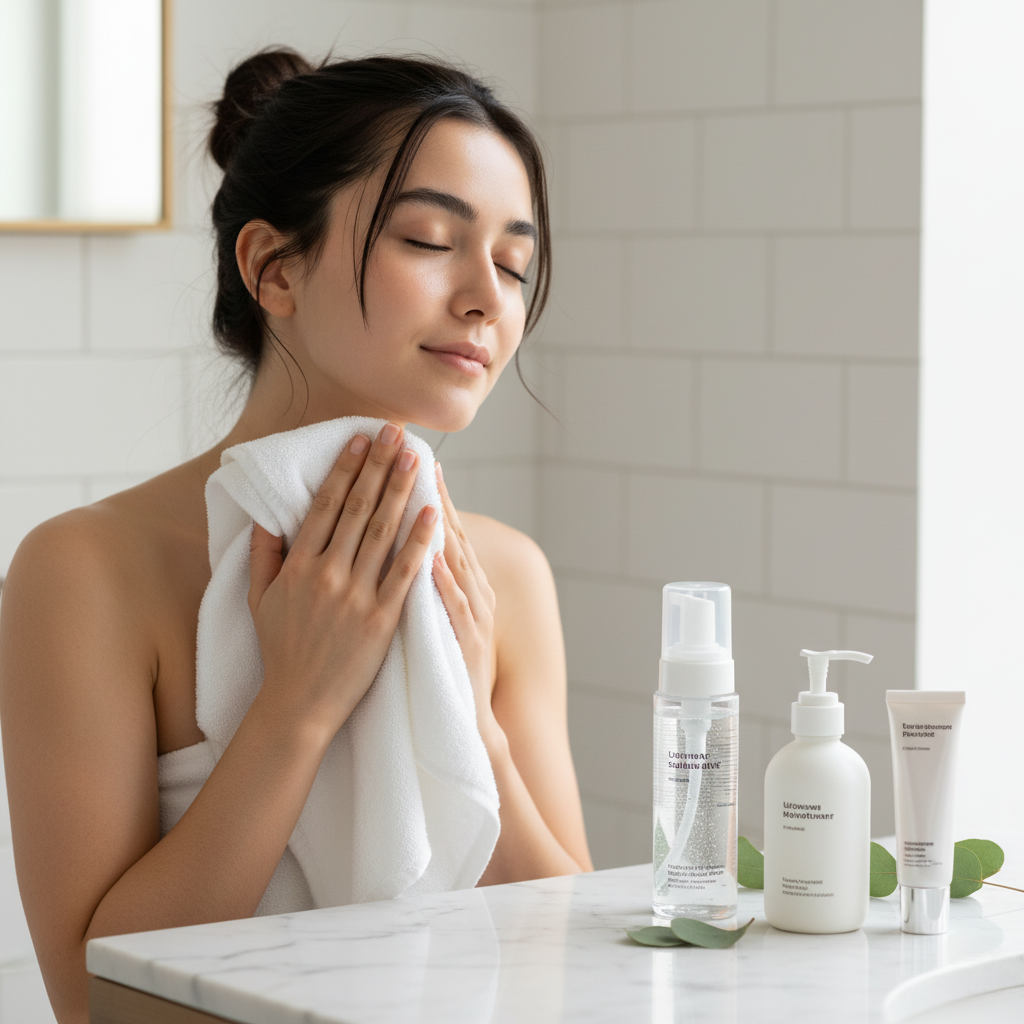
Prepping your skin means cleansing, moisturizing, and sometimes priming before you apply makeup. This step makes everything you put on afterward sit more evenly and last longer. If you skip it, makeup can look patchy or wear off too quickly.
Your Turn: Step by Step
- Wash with a gentle cleanser. Pat dry with a towel.
- Apply moisturizer suited to your skin type—a light gel if you’re oily, a richer cream if you’re dry.
- If you have a primer, smooth on a pea-sized amount to help blur pores and give foundation something to grip. Moisturizer alone works just fine if you don’t.
Watch out for: Applying too much moisturizer right before makeup. Give it a minute or two to sink in first.
Step 2: Applying Foundation & Concealer for a Natural Look
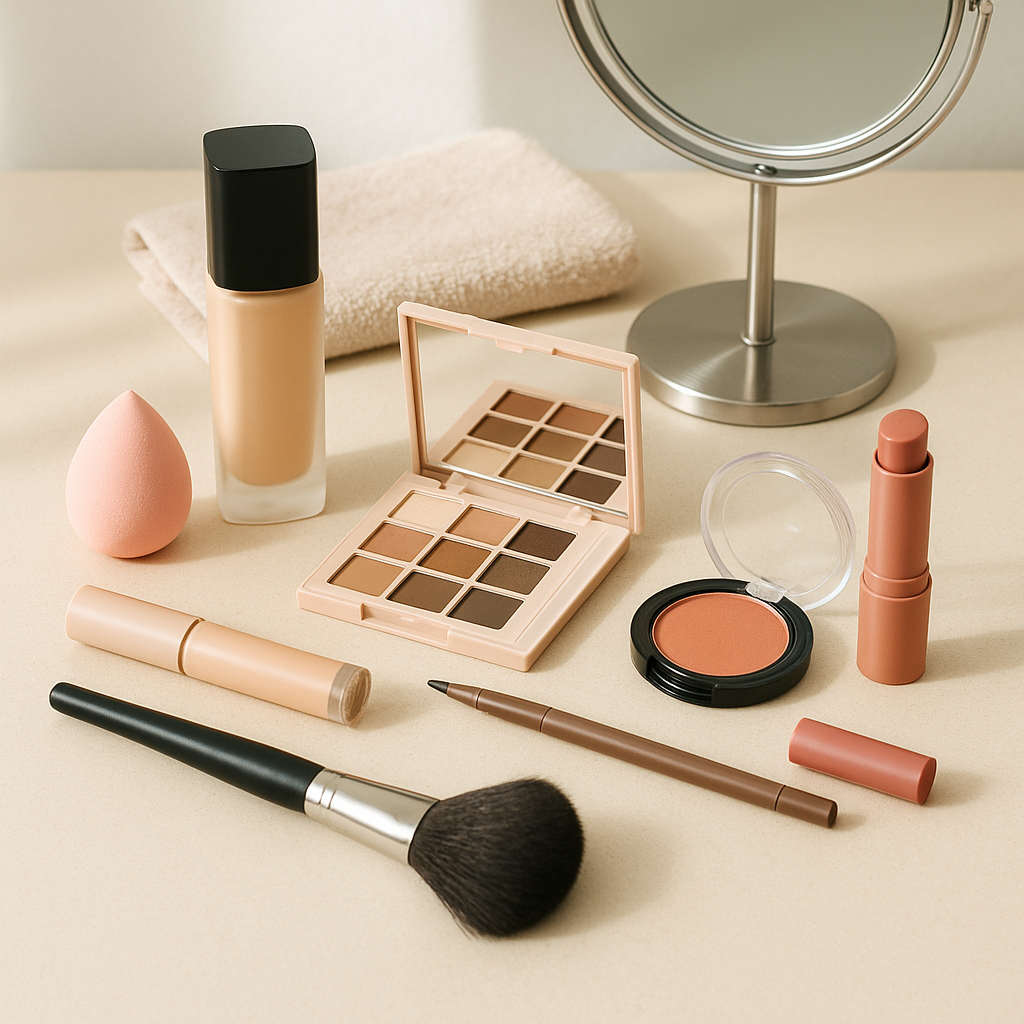
Foundation is the product that evens out your skin tone, while concealer is thicker and used on smaller areas like dark circles or blemishes. Together they smooth things out without hiding your natural skin.
Your Turn: Step by Step
- Dot a small amount of foundation on your forehead, cheeks, nose, and chin. Blend outward with a damp sponge (bounce gently) or a brush (small circles). Start with less—you can always add more.
- Apply three tiny dots of concealer under each eye or dab directly on blemishes. Blend by patting gently with your ring finger or sponge. Pick a shade that’s close to your skin tone for blemishes and a little lighter for under the eyes.
Watch out for: Using too much. Makeup should melt into skin, not sit heavily on top.
Step 3: Easy Steps for Defined Eyes
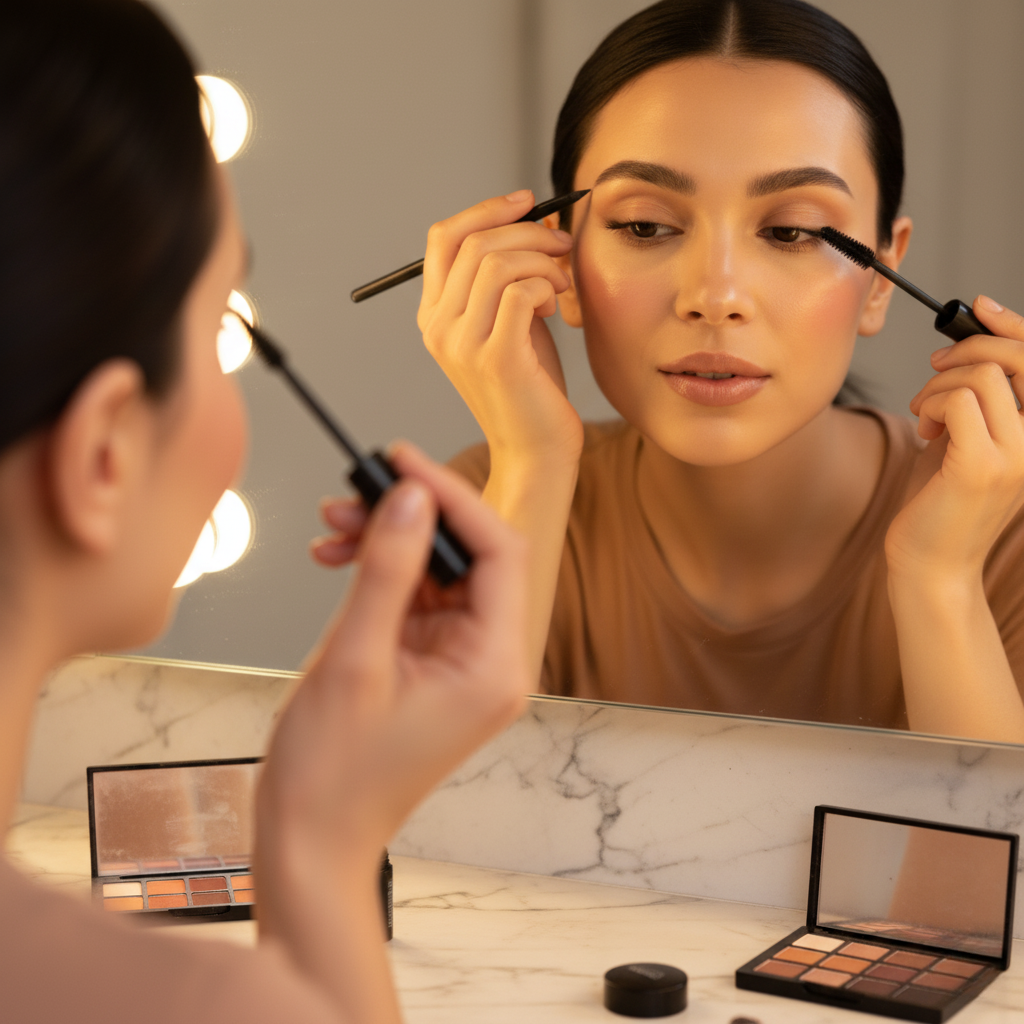
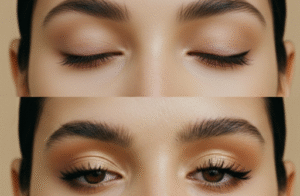
Eye makeup covers your brows, shadow, eyeliner, and mascara. Even just a touch of each can brighten your whole face and make you look more awake.
Your Turn: Step by Step
- Lightly fill in sparse brow areas with short strokes of a pencil or powder. Comb through with a spoolie to soften.
- Sweep a single neutral shade of eyeshadow across your lids with a fluffy brush.
- Draw a thin line of eyeliner close to your upper lashes, resting your elbow on a table to steady your hand. Smudge gently if the line feels too harsh.
- Apply mascara by wiggling the wand at the base of your lashes, then sweeping upward. One or two coats are enough.
Watch out for: Heavy eyeliner or overly dark brows can look harsh. Keep it light until you’re comfortable.
Step 4: Adding Natural Color with Lips & Cheeks
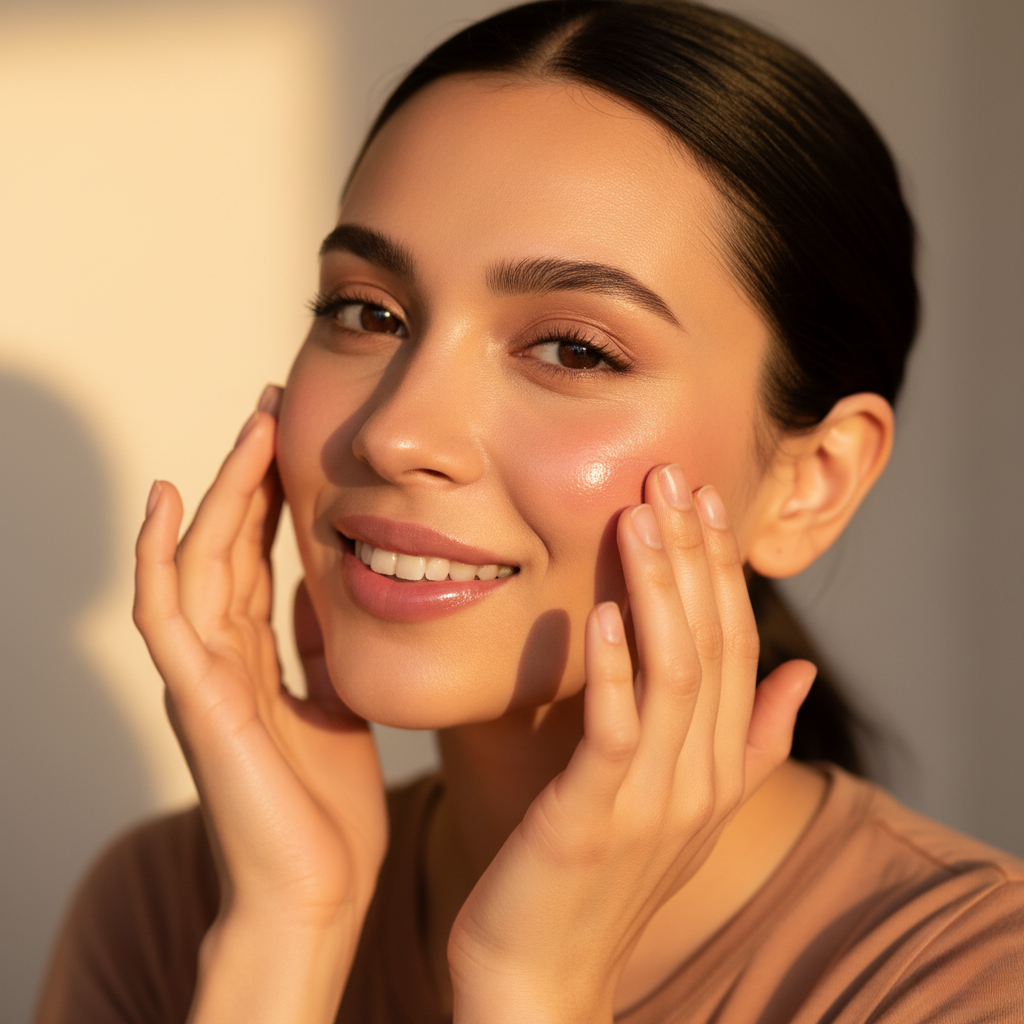
Foundation evens your skin but can sometimes leave you looking a little flat. That’s where blush and lip color come in, as they bring warmth and life back to your face.
Your Turn: Step by Step
- Smile to find the apples of your cheeks, then apply blush there and blend slightly upward toward your temples. Cream blushes are especially beginner-friendly since you can blend them easily with your fingers.
- For lips, start with a tinted balm or a sheer lipstick in a shade close to your natural lip color. Apply it like you would chapstick for a soft, polished finish.
Beginner tip: No blush handy? Dab a little lipstick on your cheeks and blend—it works in a pinch.
Step 5: Locking in Your Look with Finishing Touches
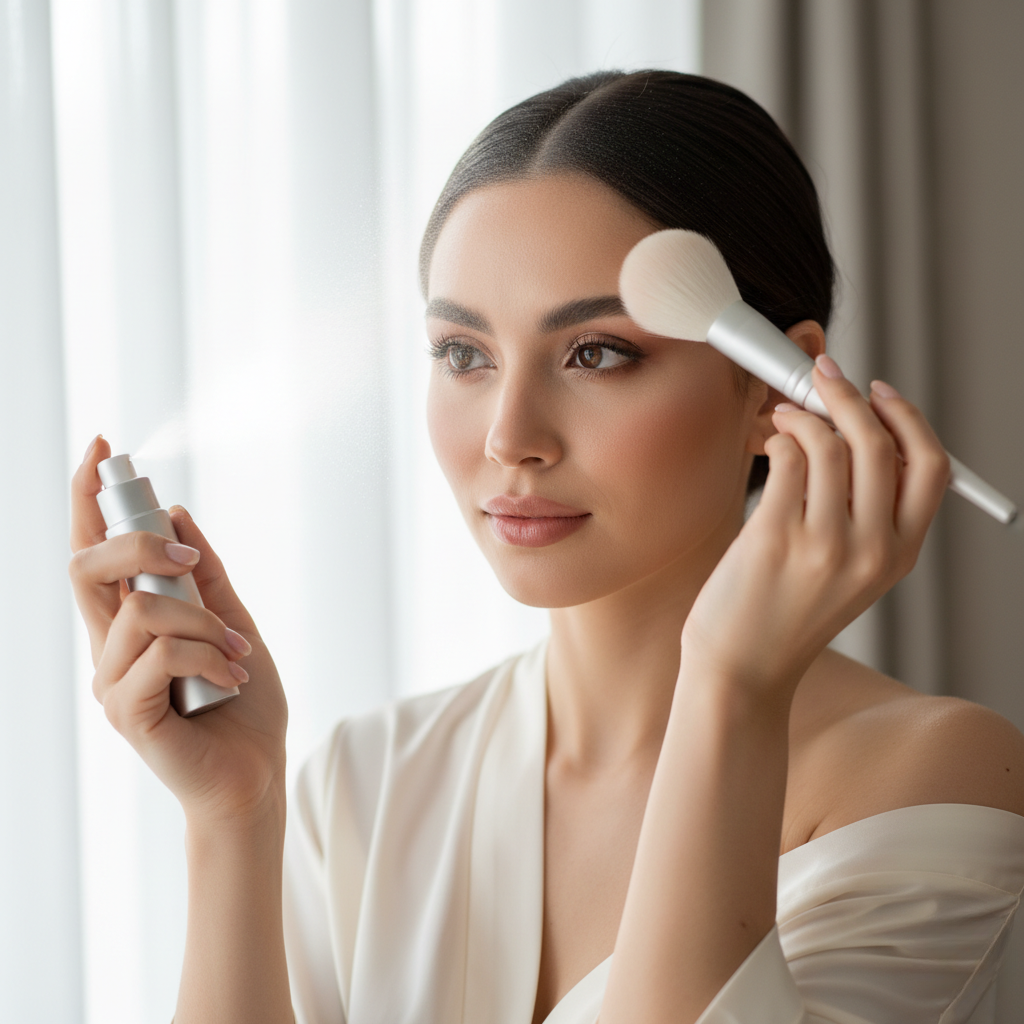
The last step is all about helping your makeup last through the day. Without it, products may fade or rub off more quickly.
Your Turn: Step by Step
- If you tend to get shiny, dust a little translucent powder on your forehead, nose, and chin with a fluffy brush.
- To set everything in place, hold a setting spray about a foot from your face and mist two or three times. Let it air dry naturally.
Watch out for: Over-powdering, which can make skin look dry or cakey.
How to Apply Makeup For Beginners? You Just Did!
Learning how to apply makeup is more about progress and not perfection. Every step you practice builds your confidence, whether it’s blending foundation or mastering mascara. Remember: makeup is there to support you, not to change you. Take your time, experiment, and have fun learning!
Try the tutorial and tell us what you think. Did it help you feel more confident? Share your thoughts below!
Beginner Makeup FAQ
Q: Do I need expensive products?
Not at all. Affordable brands like e.l.f. and NYX are beginner favorites because they’re easy to use and budget-friendly.
Q: What’s the one product every beginner should have?
A tinted moisturizer or BB cream—it’s forgiving, quick, and doubles as skincare and makeup.
Q: How do I avoid having makeup that looks cakey?
Use thin layers, blend carefully, and build slowly instead of piling on product.